Oradea, the multilingual city in western Romania known in Hungarian as Nagyvárad and in German as Grosswardein, welcomed students and teachers from across Europe for UniNet’s first ever Erasmus+ Blended Intensive Programme (BIP). Hosted by Partium Christian University, the BIP took place between 31 March and 4 April 2025 under the title Regional and Minority Languages in Action, and marked a significant milestone in the network’s educational mission.
The programme brought together participants from four partner universities: NHL Stenden University of Applied Sciences (Leeuwarden, Friesland, the Netherlands), Ramon Llull University (Barcelona, Catalonia, Spain), Stockholm University (Sweden), and Bangor University (Wales, UK). More than 20 students — mostly BA teacher trainees with an interest in minority and minoritized languages, alongside MA and PhD students — took part in the week-long exchange together with several teachers from the partner and host institutions, earning 3 ECTS credits upon completion. The working language was English.
The BIP was preceded by an online preparatory session on 20 March, during which participants introduced themselves, shared short videos about their universities and linguistic contexts, and presented an artefact representing their local culture. This blended format gave the face-to-face week a strong foundation of shared knowledge and personal connection.
The in-person week opened on Monday with an informal get-together organised by local students, setting a welcoming tone from the outset. Tuesday’s sessions focused on the linguistic landscapes of the participants’ home countries, with mixed working groups exploring similarities and differences in language use and the status of regional and minority languages across Europe. The afternoon featured a session on the advantages of bilingualism and short presentations by PhD students on their research, followed by a guided city tour of Oradea’s remarkable Art Nouveau old town.
Wednesday was dedicated to a visit to the local Hungarian-language Szent László Roman Catholic School Centre, where students observed classes at primary, middle and high school levels. The visit offered a vivid, real-world insight into Hungarian-medium education in Romania, and was followed by rich small-group and plenary discussions about the experience.
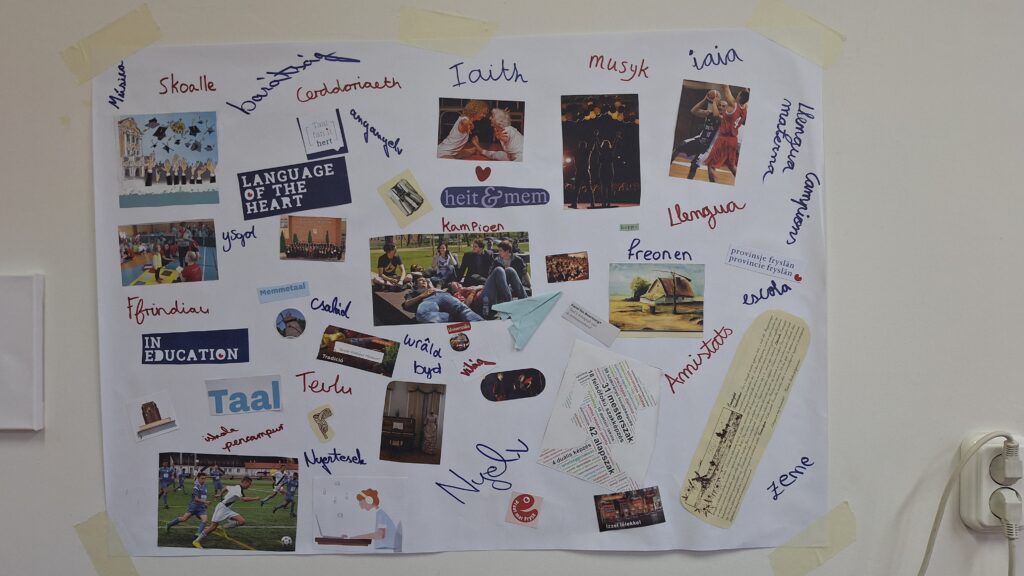
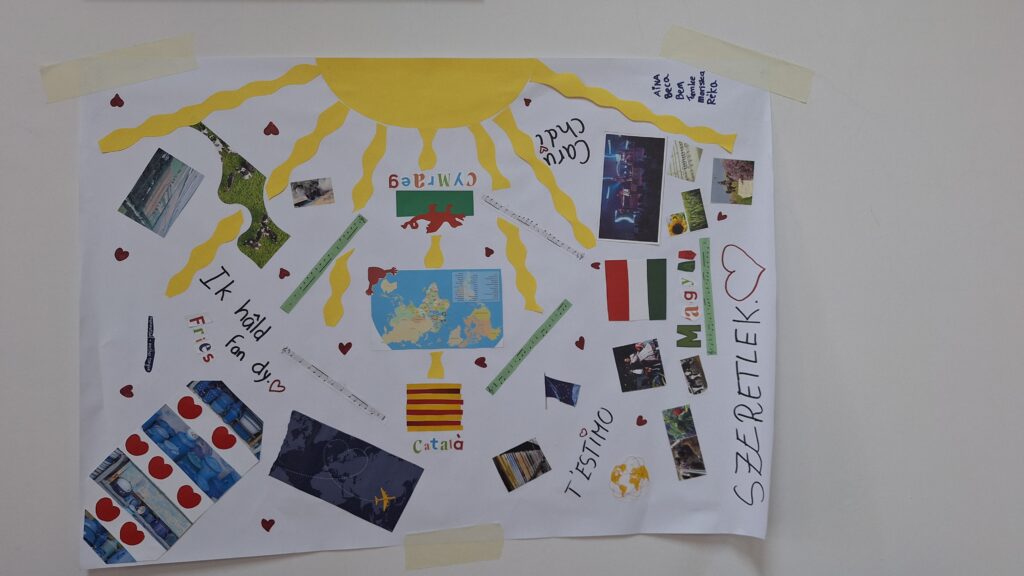
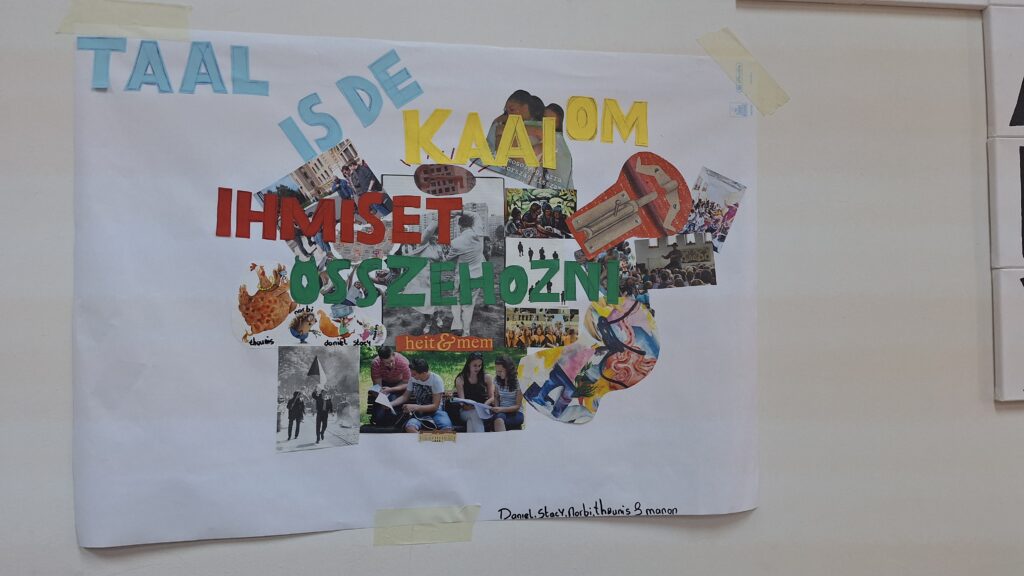
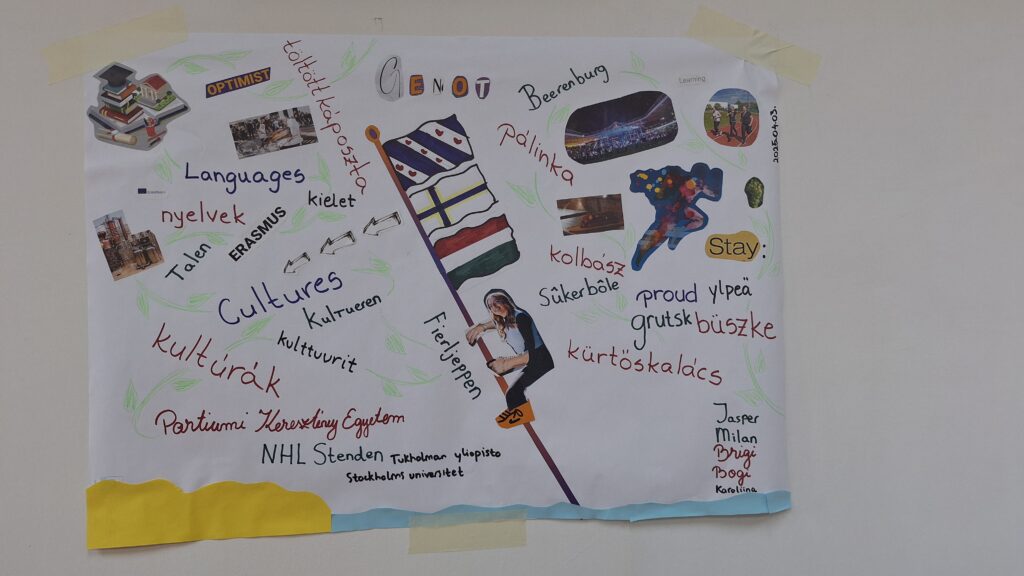
Thursday’s programme was anchored by a workshop on language use in bilingual and multilingual communities. Working in groups, students produced posters presenting language use in various contexts — at home, at university, in public life — to be shared on the UniNet website. The afternoon was devoted to microteaching preparation: students developed A1-level game-based lesson plans for teaching their mother tongue to foreigners, regrouped by language. The day concluded with a folk dance evening and a traditional Transylvanian dinner.
On Friday, the microteaching activities took centre stage, with students delivering short lessons in each of the minority languages represented in the group — a lively celebration of Europe’s linguistic diversity. The week closed with a certificate ceremony and a farewell dinner.
Student feedback was overwhelmingly positive. Participants highlighted the school visit, the mixed-group work, the microteaching activities and the social programme as particular highlights. Several noted how the week had deepened their awareness of the challenges facing minority language communities across Europe. The response was perhaps best summed up by a recurring request among participants: Can we come back?
The BIP was organised and hosted by Partium Christian University and was made possible by the Uninet network launched by the Network to Promote Linguistic Diversity (NPLD) and the Province of Fryslân, and the Erasmus+ programme of the European Union.